


A History of Settler Farming on Salt Spring Island
Highlights from a talk by Usha Rautenbach and Charles Kahn, given at the Salt Spring Centre of Yoga on Tuesday, January 27. 2026
Salt Spring was one of the first farming communities in British Columbia and remained so until the end of World War II. No fortunes were made in farming, and working the soil was always difficult. Only 20 percent of the land was suitable for agriculture and most of it was scattered in little pockets in low-lying areas. Farming on a large scale was not possible.
Settlers began arriving in 1859, but official surveys did not take place until the 1870s. Surveyor Ashton Green, who mapped much of the island in 1874, expressed skepticism that farming here could succeed at all. He found the land rocky, wet, and unforgiving. Yet history proved otherwise. Areas once dismissed as useless wetlands later became some of the island’s most productive farmland after it has been logged, drained, and worked with care.
The first settlers
In 1859 Governor James Douglas allowed many indigent immigrants in Victoria, desperate for a place to settle, access to aboriginal lands in BC. Some of these chose Salt Spring despite the fact that the island was isolated from centres of civilization by the surrounding waters, that it was geographically rugged and covered by huge Douglas firs that had to be cleared before farming could take place, and that no treaties had been signed with the aboriginal peoples who used the island as a hunting and fishing reserve and considered it theirs. About half of the first settlers were free Blacks from California who wished to live in the British colony.
These settlers arrived on Salt Spring Island to a place with no infrastructure–-no roads, no docks, and no shops to buy essentials. Because there were no docks, people came ashore by rowboat, landing only where beaches existed, such as Fernwood, Vesuvius Bay, and Ganges Harbour in the north and Beaver Point, Burgoyne Bay, Fulford Harbour, and Isabella Point in the south. From there, they faced dense forest dominated by massive trees.
Most settlers arrived with almost nothing. They had almost no money, minimal equipment, and little understanding of how to survive in a place so radically different from what they had known. Clearing land alone was an overwhelming task. Here’s a quote from Margaret Shaw Walter, daughter of a Galiano pioneer: “It meant slow hard work to clear a homestead from the forest: felling trees, burning them, digging among the stumps to plant potatoes, vegetables, and different grains; getting some fowl and later on, cattle by degrees.”
Some years later, one member of the Caldwell family described the process as follows: "The first step was to cut a circular clearing out of the forest. This clearing was near a water supply and was three hundred feet in diameter so the cabin could be erected out of danger of falling trees. In some cases the tree trunks were seven feet in diameter, making the use of a saw impractical. In a case like that the settlers drilled two wide holes in the log with an auger, which enabled them to set fires inside the trees and burn them into sections that were then piled around the stumps and burned leaving a deposit of ash." This is illustrated in the following photo:

The poorest settlers were mainly in the south: ex-Hudson Bay Company employees, and unsuccessful miners who often married First Nations women. These mainly Scots and Kanakas (Hawaiians) were subsistence farmers, at first planting mainly peas and potatoes. Those better off, like Henry Ruckle, Theodore Trage, and the Pimburys, accumulated hundreds and even thousands of acres of land, planted large orchards, and grazed mainly sheep.
Farming in those early decades was not about making money; it was about survival. These early farms produced barely enough to feed a household. Any modest surpluses from produce sold was used to buy essentials like flour, sugar, or clothing. Even the more “successful” farmers often barely broke even.
Where they settled
The first settlers found and pre-empted (claimed) the best farmland.
In the south:
Beaver Point (Theodore Trage, Henry Ruckle. Kahana/Tahouney, Alexander McLennan)
Burgoyne Bay (John Maxwell, James Lunney)
Fulford Valley (Joseph Akerman, Michael Gyves)
Musgrave (Pimbury brothers)
In the north:
Fernwood/Beggsville (Jonathan Beggs, Henry Sampson, Edward Walker, James McFadden, Hiram Whims)
Vesuvius (Estalon José Bittancourt, Manoel Antoine Bittancourt, Louis and Sylvia Stark, Joel Broadwell, John and Delarvo Norton, later Rev. Arthur Wilson)
Ganges (Mr. And Mrs. Thomas Henry Lineker, later Charles and Leonard Tolson)
Booth Canal (John Patton Booth, later Arthur Walter)
Upper Ganges (Harry Bullock, Henry and Anne Stevens)
Walker’s Hook (William and Henry Caldwell)
Mansell (Daniel Fredison)
Beddis (Samuel Beddis, Raffles Purdy)
There was no contact between these settlements as there were no roads until 1885. Travel was by sea and any surplus goods for sale went to Victoria and Nanaimo. The first public wharf on Salt Spring was built in Vesuvius in 1864. Others followed in Burgoyne Bay (1869) and Vesuvius on the west side of the island, and Fernwood, Ganges, and Beaver Point (1895) on the east side. Steamer service was infrequent: once a week in the 1890s. By 1900 this had increased to twice a week to Nanaimo and four time a week to Victoria. The steamers travelled from Vancouver along the west side of Salt Spring to Victoria and along the east side to Nanaimo.
The surprising diversity of early settlers
The settlers were not a homogeneous group. The Black families from California brought some agricultural knowledge and, often, their families. Most of the other settlers were bachelors, whom Douglas encouraged to marry Indigenous women, as First Nations women knew how to harvest food, steward land, and survive harsh winters, and their families provided essential support. These marriages often meant the difference between survival and failure for settlers.
These relationships also highlight fundamental differences in how land and food were understood. Among local First Nations, harvesting rights were governed through women’s stewardship of specific areas, with knowledge passed down through generations. A settler who married into a family learned where and how harvesting was permitted. Unmarried settlers and Black settlers, who already had families, did not enter these kinship systems—and did not have those rights. Historians sometimes misinterpreted the fact that Indigenous people sometimes seized crops grown on their lands without permission. as racial conflict rather than enforcement of long-standing land stewardship laws.
In the late 19th century, Salt Spring was being advertised as a place of opportunity. Among those drawn by this were Scots and Anglo-Irish settlers who arrived in the 1880s, many of them comparatively wealthy. As a result, many of the larger, better-capitalized farms were concentrated in the north end of the island closer to existing services. This uneven distribution of wealth shaped the island early on. While some settlers arrived with resources, others were poor, scraping a living from difficult land.
Census records tell a striking story: in 1891 only 435 people lived on Salt Spring Island. Roughly two-thirds of the population lived on farms. Even by 1901, the population had grown to only 558. Thus Salt Spring was a sparsely populated, intensely agrarian place.
The development of infrastructure
In the early years, almost all farm work was done by hand or with oxen or horses. Oxen were often preferred to horses for their strength and steadiness. Ploughs were simple, and many tools were shared or rented. Large machines like threshers moved from farm to farm because few could afford to own them outright.

Over time, roads were built, and by the early 1900s stores appeared. Mouat’s began in 1907 when the family bought an existing store in Ganges. The island’s small communities were becoming increasingly connected.
In the earliest days islanders launched rowboats, sailboats and later motorboats, loading them by hand with boxes of apples, milk cans, seed trays, and other products and supplies. To begin with, settlers had to rely solely on private boats owned and operated by people who had the means to buy them. Later on, steamer traffic increased and some islanders, including Mouat’s store, provided boat transportation for a fee.
Agriculture on Salt Spring Island has always relied on collective effort. Early agricultural societies formed just two years after settlers arrived. These organizations supported farmers, shared knowledge, and publicly celebrated their successes. The fall fair embodied this spirit. First held in 1896, it showcased crops, livestock, and local crafts.
Historian Mort Stratton summarized early farming on Salt Spring in his book Farms, Farmers, Farming: 1859-1939, as follows:
If the family farm on the island was small, it was extraordinarily versatile. Every farm had an orchard and garden, usually one or more milk cows, pigs, and chickens to drink the skim milk left over from making butter, perhaps turkeys, ducks, and geese, and sheep to forage on the hills. Basic field crops included hay, grain, and roots by the ton to feed the stock. Very little cash traded hands amongst these mainly subsistence farmers. But there was always an attempt to raise some surplus to generate the money needed to buy staples for the household like flour and sugar, and clothes for the family. For the farm operations, too, there was an increasing need for cash. Nursery stock, livestock, seed grain, fertilizer, and basic equipment such as plows, mowers, rakes, and harrows still required cash. Up to about 1900 island farmers imported hay from the mainland as well as for winter feed. To pay for these necessities farmers sold their excess fruit, vegetables, and eggs. Potatoes were marketed in large quantities; some farmers shipped lambs and wool; and farmers' wives marketed small quantities of homemade butter. Most farmers had to be content with breaking even at the end of the year. Even the more prosperous farmers of this period accumulated very little, passing on to their heirs real estate that was increasing in value but very little cash.
Agricultural specialization
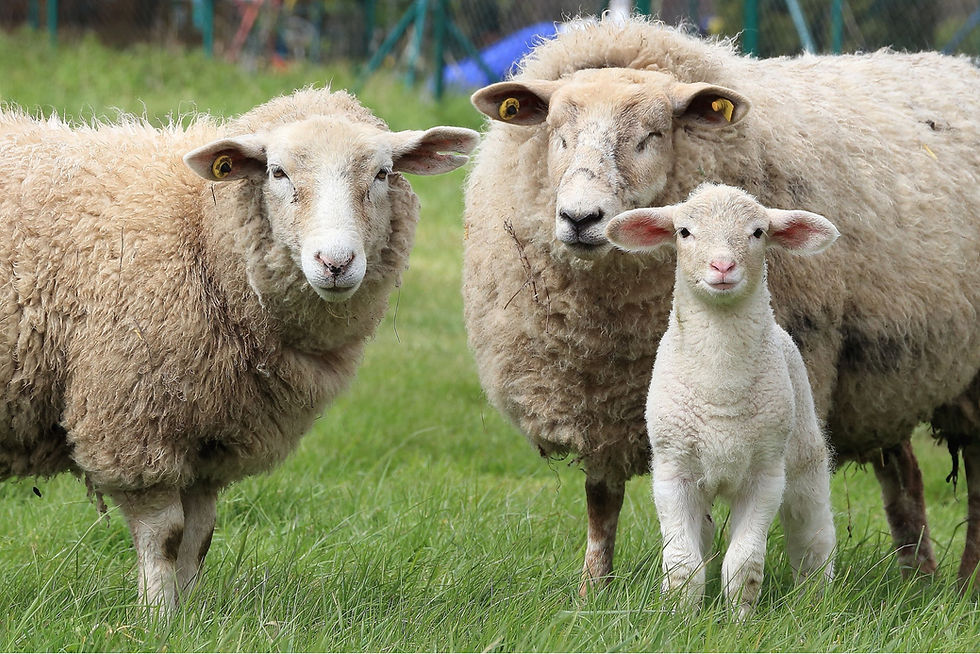
Among large-scale operations, sheep farming was very important in the very early years, with some landowners having many hundreds of animals. The Pimbury brothers in the Musgrave area were the first sheep farmers, and Edward Musgrave, who only lived on Salt Spring for a very short time, continued to run sheep on the same property he acquired from the Pimburys. An 1891 diary by one of Musgrave’s shepherds, Alexander Aitken, provides interesting information on this farm, which had closer connections to Cowichan Bay than with the rest of Salt Spring as Musgrave Road had yet to be built. According to Aitken, the farm had 1100 sheep, which were raised primarily for their wool.
Orchards were also very important. Skilled horticulturalists, like Theodore Trage, established large orchards. For a time, apples were shipped as far as San Francisco, and Salt Spring fruit was known and highly valued. Then came competition. The rise of the Okanagan as a major fruit-growing region, combined with large-scale production in Washington State, changed everything. These areas could transport their products much less expensively than could farmers on an island. The small-scale operations on Salt Spring simply couldn’t compete.

Statistics on the production of the island’s orchards are fragmentary, but those available give us some idea of the size of the harvests. Harry Bullock, Theodore Trage, and Ed Lee were each reported to be shipping about 2,000 boxes of fruit (40 pounds to a box) in a good year. The Scott brothers were harvesting big crops of prunes from their Fruitvale orchard in 1902. Up to ten tons were to be put through their evaporator, and the following year, ten Chinese workers were hired to pick the expected forty-ton crop. In 1913, an article in the Sidney and Islands Review reported: “A conservative estimate places 20,000 boxes of apples as the annual shipment of that fruit alone from the island [Salt Spring].” Assuming forty-pound boxes of apples worth two cents a pound, the 1913 harvest would have been worth $16,000, a substantial amount of money in those days.
As the importance of orchards declined, dairy farming took centre stage. The Salt Spring Island Creamery opened in 1904 and was operated as a cooperative for more than 50 years. Milk was first delivered to the creamery by the farmers themselves. Later the creamery hired a driver to collect the milk from roadside cans. The butter produced here became famous well beyond the island. Salt Spring Island butter was a much sought-after delicacy in Victoria, as was Salt Spring lamb. Regulatory change eventually destroyed the dairy industry on Salt Spring, as mandatory pasteurization required expensive equipment that small creameries couldn’t afford.
Poultry farming was also important. Some dairy farmers switched to poultry when they had trouble finding workers. Paul and Marie Bion started the first large poultry farm on St. Mary Lake. They kept about a thousand Leghorn hens. Ted Parsons had a 160 acre (65 ha) farm on Mansell Road where he raised 4,000 Leghorns. His eight incubators hatched almost 12,000 chicks a year. By the late 1930s they were selling about 1,200 dozen eggs a week to a commercial hatchery in Langley.
Nurseries and seed farms were another significant enterprise. The first nursery was Jonathan Beggs’ operation in 1859 in what is now Fernwood, then Beggsville. Beggs had a post office, his own boat to transport his stock, and a keen business sense. Later the James Brothers Seed Company produced fruit and vegetable seed stock which was sold internationally from Salt Spring Island. This company kept growing and needing ever-larger farms. One of these was Beggs’ original farm, then owned by John Charles Lang. Eventually, it moved to a property on Vancouver Island.
Market gardening, especially by Japanese Canadian families, was important to many small farms. The Japanese Canadians built large greenhouses, producing vegetables year-round. These farmers were central to local food production, yet their contribution to island agriculture was violently disrupted in 1941 during during World War II when Japanese Canadian families were forcibly removed, their properties seized, and their greenhouses often deliberately destroyed. But despite their harsh treatment, these families contributed greatly to the island, helping to build the high school and, in the case of the Murakami family, donating property for affordable housing.
Still, most island farms remained mixed and modest. Even as tractors and steel-wheeled machinery appeared, many farmers continued to rely on versatile, small-scale operations simply to get by. Nearly every farm kept chickens, providing eggs for household use and for sale.
Farming today
For a time after 1945 many no longer considered Salt Spring an agricultural community. Certainly, large-scale agriculture no longer existed. But small farms continued, and in the 1970s farming institutions began to re-emerge. The fall fair was revived and the local high school offered programs in agricultural education. By the 1990s, Saturday markets in Ganges showcased small-scale, diverse, and creative production. Vegetables, preserves, flowers, cheese, and baked goods filled market tables. While producers no longer ship goods off-island, they continue to sell to an increasingly large local market.

Based on 2021 Census of Agriculture data and local land-use reports, farming is a foundational, albeit small, part of the Salt Spring Island labour force. While the island has a robust, well-known food and farm culture, the actual proportion of the total resident population employed directly in farming is relatively low, with many farms operating as small-scale or part-time operations.
Today’s farming renaissance looks different from the past. It’s largely organic, often rooted in permaculture, and deeply values land stewardship. Apples and other fruit still grow in astonishing quantities on Salt Spring, a quiet echo of that earlier abundance. Today, the Salt Spring Island Farmland Trust works with crews of gleaners to harvest and distribute as much of that bounty as possible. Salt Spring Wild Cider also has possibly the largest apple recovery operation in Canada, crafting fine ciders from rescued fruit.
As historian Mort Stratton wrote in Farms, Farmers, Farming, even after the decline of farming, “creative use is still being made of the soil.” The farms are smaller. But the impulse to grow food, to work together, to belong to the land remains remarkably intact. Salt Spring Island’s agricultural story is one of adaptation, resilience, and renewal. It is still unfolding and is still rooted in the soil beneath our feet.


Wonderful article. I love the map!